EV Charging: A Year in Review
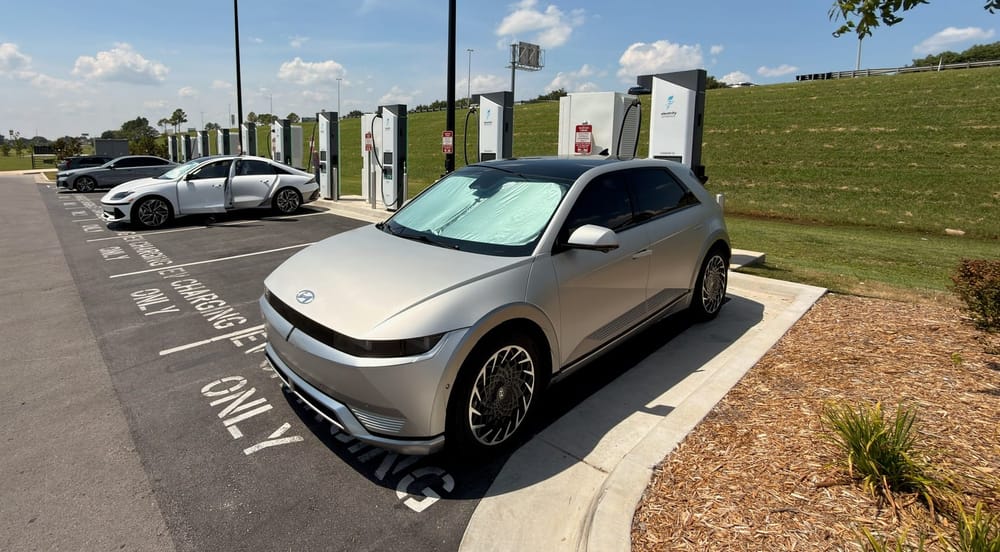
Like seemingly every other service that collects data, my EV charging network (Electrify America) sent me a year-end summary email. Apparently, I am in the top 10% of their users nationally. Which I guess makes sense being that I nearly exclusively charge my car at their stations in Tulsa.
My 2024 Ioniq 5 came with 2-years of “free” charging at EA chargers, and since I live in a condo, and am not able to charge at home, I take a quick 15 minute drive out to charge every week.
Me being me, I have scripts running that capture my charging sessions and mileage automatically. So here’s what that looked like in 2025.
By The Numbers
- ~10,000 miles driven (I started recording my odometer in February, so I am not entirely sure how much I drove in January)
- 115 charging sessions
- 4,119 kWh consumed
- 31 hours total time plugged in
- $14.84 out of pocket
That last one is a fun one that I could write a LinkedIn-ass clickbait title using, “How I charged my car for a whole year with only $14.84.” Like & subscribe. Obviously I’ve been using every bit of that free charging plan.
My Routine
There are only two EA stations in the Tulsa area, one at the outlet mall in Jenks (so yes, I take my car to the outlets to charge), and one at the Target in Broken Arrow. Both are about 15 minutes from my place in Brookside. Between the two, they handled 90% of my charging for the year.
Looking at the data, Saturdays were my primary charging day. I’d usually be at home or a coffee shop in the morning and then head out to charge after, then 20-ish minutes later I’d be back at 80%. Most months, that rhythm just worked.
30-minute Workaround
The one catch with the complimentary charging plan, is the 30-minute per-session limit. So if your session goes over, you just pay for the overage. The way that batteries work in warmer months, the limit is not a problem, the 77kW battery charges fast and I’m done well before the limit, even from a very low starting percentage. But when it’s cold out, the battery is not able to take on the electricity as fast. So if you’re not looking to spend anything, you can just stop the session before it gets to 30-minutes, unplug, re-plug and start a new session. Then boom, the free charging continues.
I started to not care about the overages though, and boy did it cost me. The overages total for the year was a glorious, $14.41.
EA Only, EV Road-tripping
July broke the pattern. I drove from Tulsa to Nashville and back for a Coldplay concert. The trip totaled, 1,300-ish miles across 15 charging sessions. When you’re road-tripping you really stop optimizing for free charging, and only care about making it to the next charger. The 80% rule goes out the window. I charged to 92%, 99%, 100% or whatever ABRP said I’d need to make it. $12.00 of my out of pocket for the year was from this trip.
Out-of-pocket Cost
So where did my $14.84 actually go?
- $14.41 — Seven times I let a session run over the 30-minute limit, some longer that others.
- $0.43 — One idle fee. I left it plugged in for 1 minute over the 10-minute grace period after it finished. Once.
If I hadn’t had the free plan, the year would’ve cost around $2,480. So I’ll take it.
What’s Next
My free charging plan ends in April 2026. I haven’t fully figured out what comes next, but there’s another charging network closer to home that I’m looking into. I haven’t run the costs yet, so we will see.
What I do know: I’m not going back to gas. The instant torque, the responsiveness…it’s addicting. For how much I actually drive and my ultra flexible schedule, a full EV is perfect for me. Even without the ability to charge it up at home.